
01 / 06
Sounds Like Antwerp
Turning city data into sound
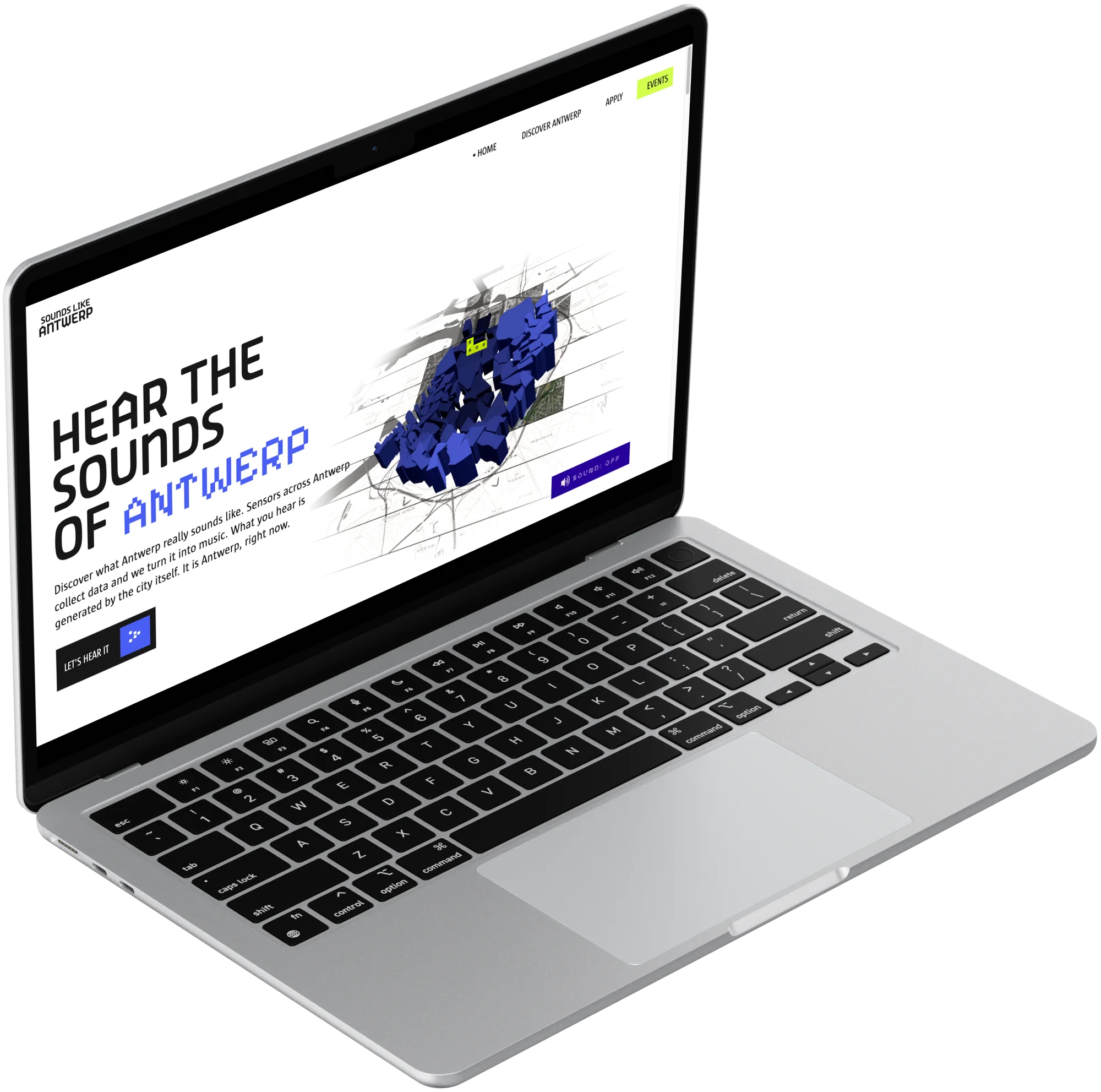
For Visit Antwerp, our team of four developed Sounds Like Antwerp, a digital experience that lets you discover the city through sound.
Using live data and the unique energy of different neighbourhoods, Antwerp is transformed into music. Instead of following another typical city guide, visitors can listen to the city, explore its rhythm and create their own Sound of Antwerp.
The brief
Client brief
Visit Antwerp asked us to convince more young urban travellers (18–36) to consciously choose Antwerp for a city trip of several days, not just a quick stop on the way somewhere else.
This audience looks for authentic, creative and less obvious places, avoids classic city marketing and has little trust in official institutions. They get their inspiration from social media, creators and friends.
The concept had to be digital-first, feel authentic rather than like a promotional campaign, and combine at least two of: a digital application, a physical activation in the city and a social media format. It also had to be scalable, from a €5,000 to a €30,000 version, and use the city’s youth brand style.
Collaborators
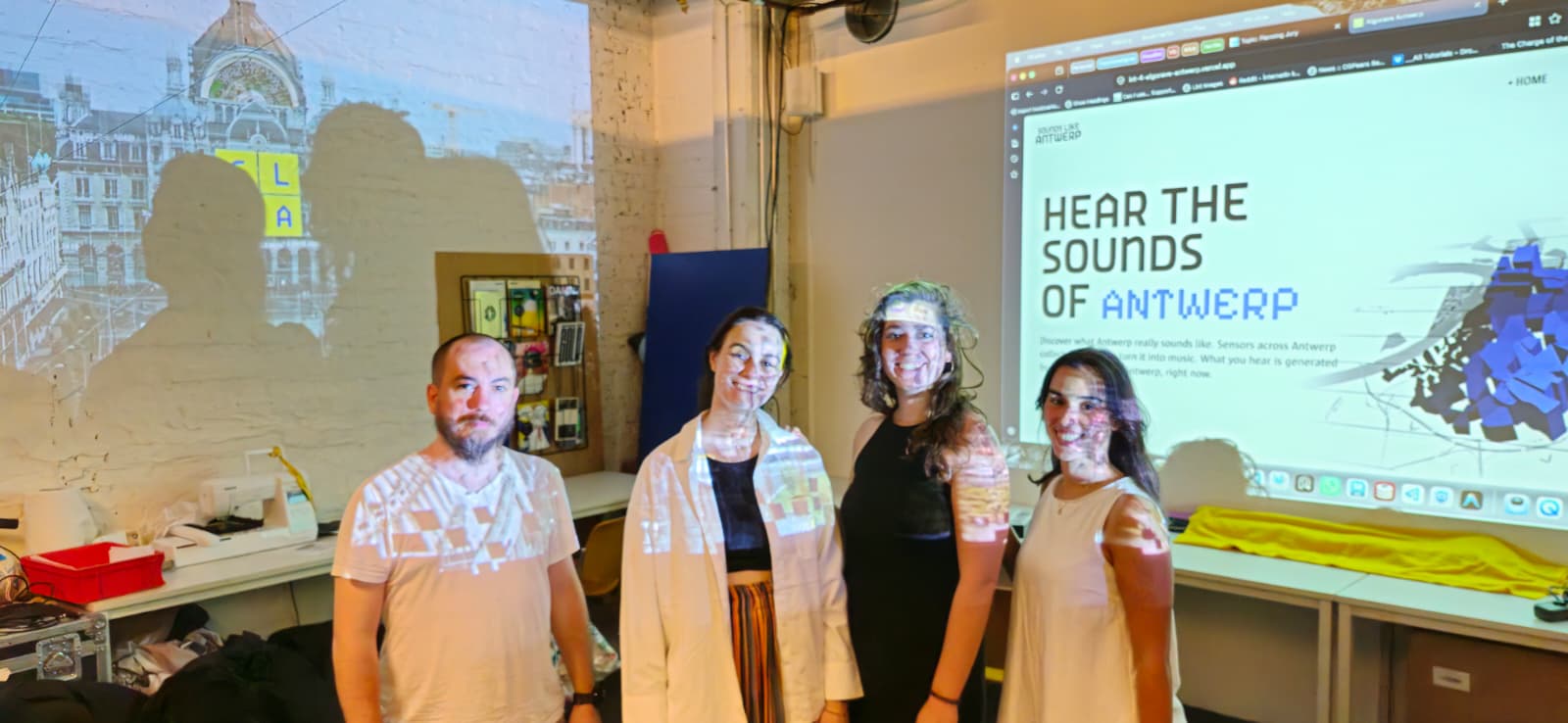
- Abdulhalim Yalcinkaya: Team Lead
- Agata Tomaszewska: Developer
- Indi Watté: Visual Designer
- Luna Ben Elfkih: UX Designer
The problem
Young urban travellers don’t find Antwerp relevant. They know it exists, but nothing has made them feel it was made for them. The city’s most interesting qualities are invisible in conventional tourism content.
Research question: how might we reshape the perception of Antwerp for young urban travellers, from “Go to Antwerp? No thanks!” to a vibrant, must-visit destination?
The process
Research
We started by pulling Visit Antwerp’s brief apart into its core challenge, the audience’s pain points and the limits we had to work within. Desk research into Antwerp’s City of Things sensor network then grounded our early “algorave” idea, and a SWOT analysis and a research scoping canvas showed us where that idea was still weak.
We focused on Zillennials and checked our interview insights against Schwartz’s Basic Human Values. The key finding: young travellers don’t trust tourism boards, and they often hear about the city’s local scene too late.
The concept
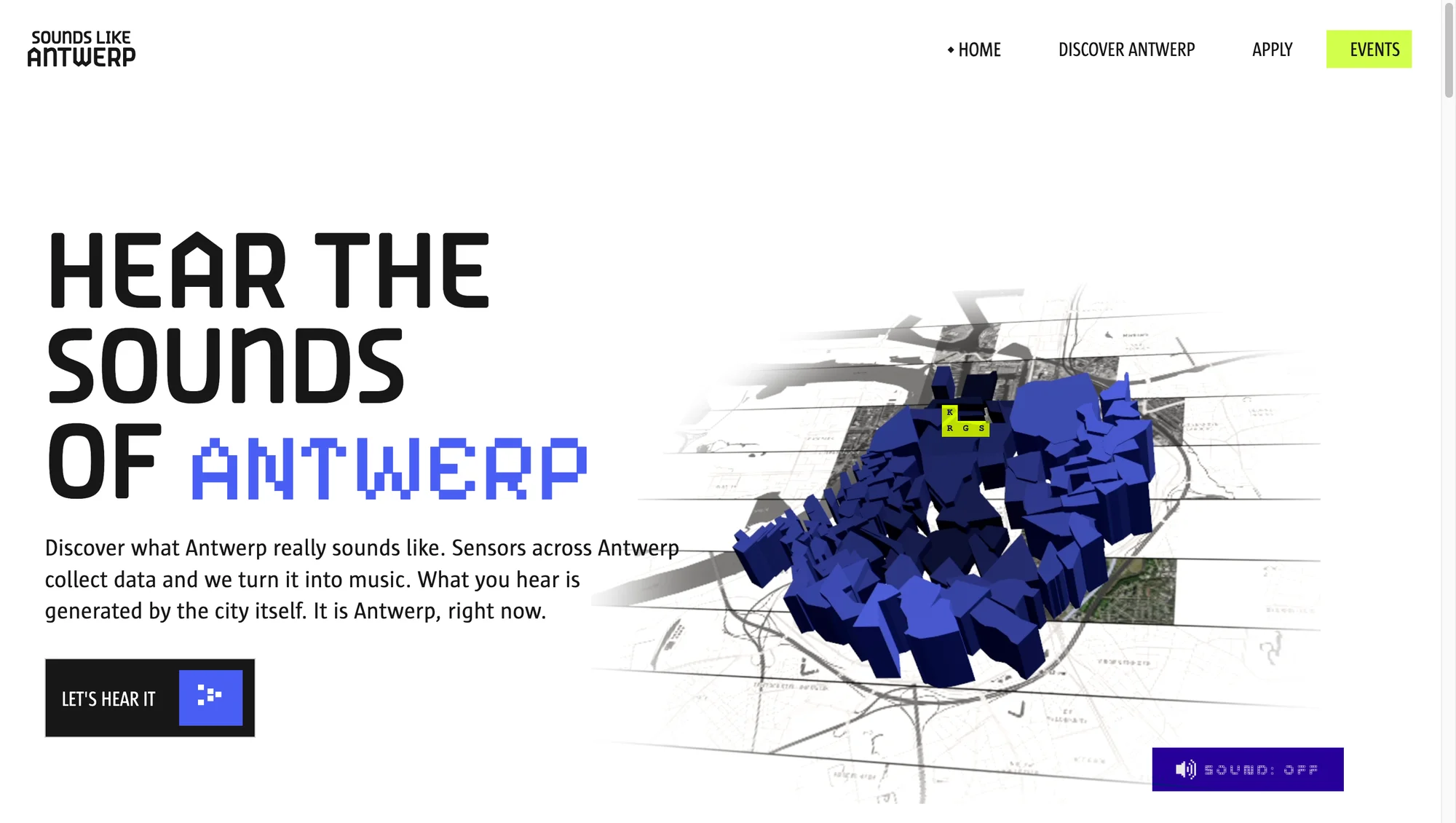
A digital-first platform that lets the city speak for itself. Sounds Like Antwerp turns Antwerp’s real sensor data into generative music and art, so anyone can experience the city before setting foot in it, and feel part of it.
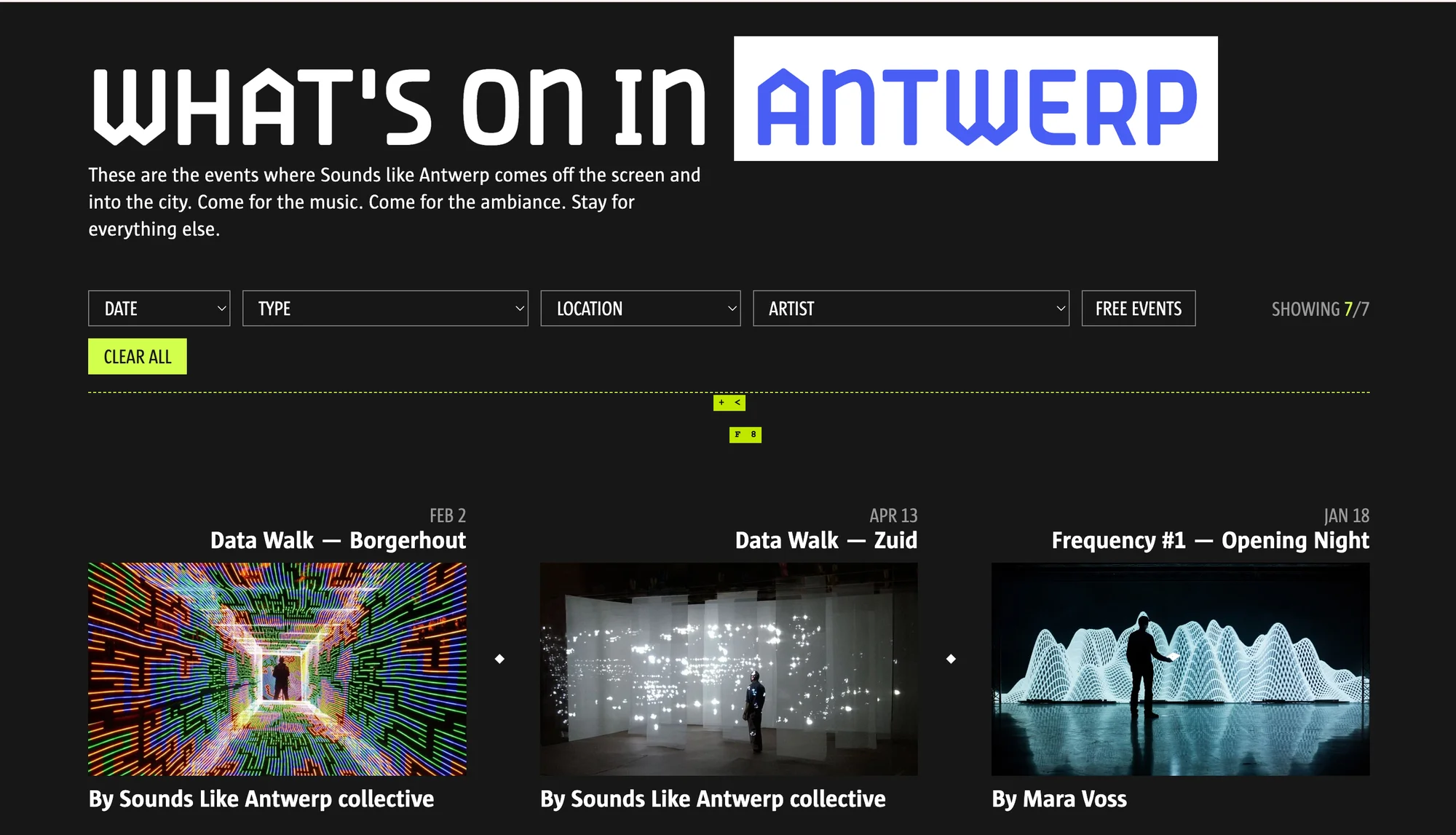
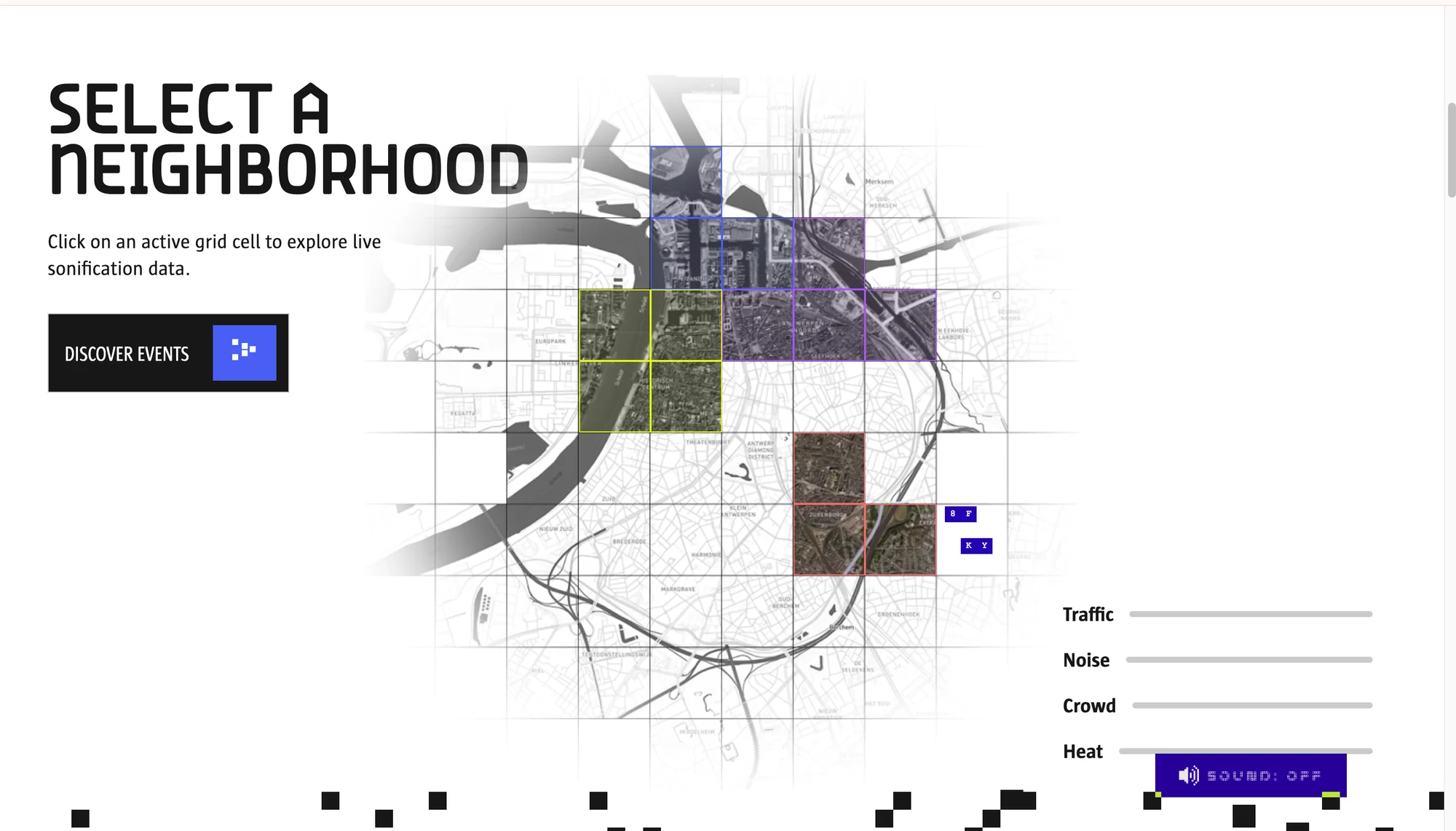
You pick a neighbourhood on a map of Antwerp, open the sound builder and connect the city’s live sensors to instruments. Save your sound, share it, and find out what’s on in that part of the city.
Visual language
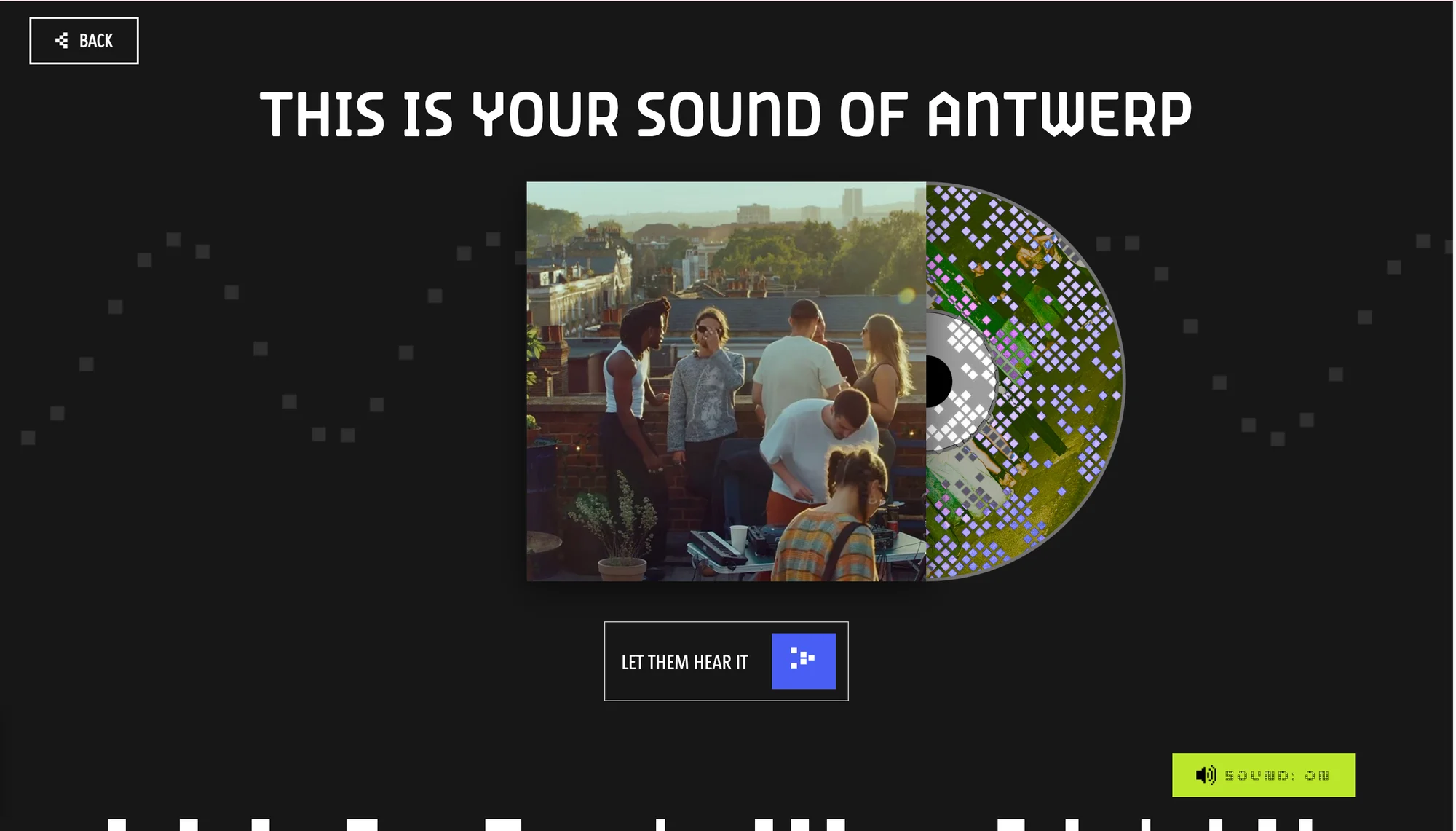
Starting from Visit Antwerp’s youth branding, I kept the city fonts and narrowed the 9-colour palette down to acid lime, black and electric blue, the colours closest to the underground rave scene. Pixel fonts, dither effects and grain turn documentary photos of the city into fragmented data. It’s recognisably Antwerp, but raw, experimental and made for a younger crowd.
The design system
My main job in the team: building the design system everyone designed and built with. The starting point: we extend Antwerp’s identity, we don’t override it. The city brand is the container, our project the living thing inside it: cold, documentary and slightly raw. Less a tourism campaign, more a living platform.
Three principles guided every choice: experimental, not exclusive; let Antwerp speak without words; and playful, not intimidating.
- Colour: 3 of the 9 colours of Visit Antwerp’s youth branding (acid lime, black and warm grey), plus an electric blue. The closest fit to the underground, nocturnal rave scene.
- Typography: the city’s own Antwerpen fonts for headings and body, Pixelify Sans to make big words stand out and Littlebit Square for data labels and sensor readouts.
- Pixel language: on scroll, photos break into pixel tiles and a Bayer dither: the city’s analogue reality being sampled into digital data. A subtle grain refers to rave flyers and print.
- Photography: urban documentary. Observed rather than staged, high contrast and natural light: Antwerp captured as it is, active, imperfect and always moving.
- UI: particle-based icons and graphics, no round shapes, and a grid where a 2px seam turns the background itself into the grid.

Technology
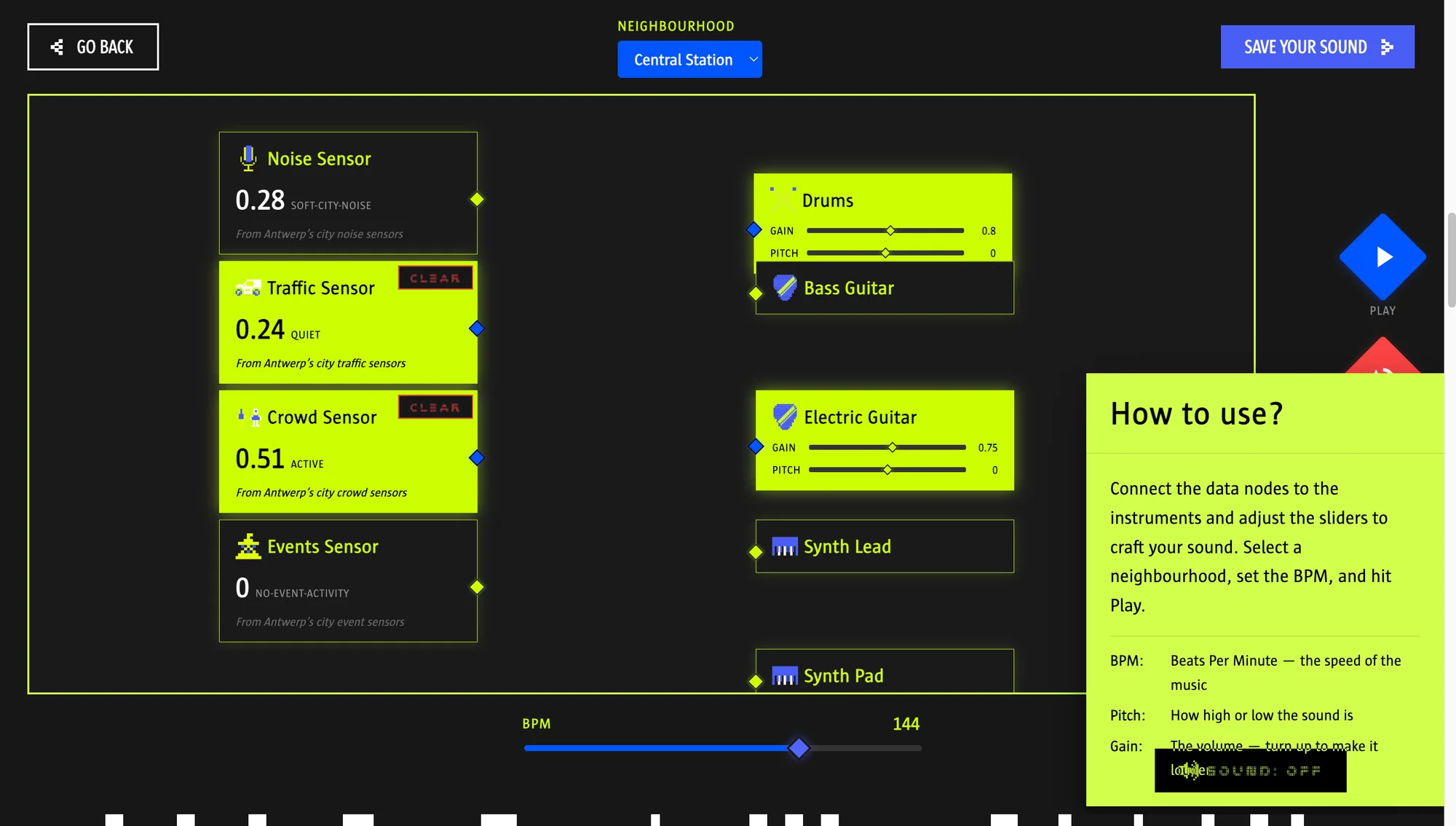
Each neighbourhood has live readings from Antwerp’s city sensors: noise, traffic, crowds, events and heat, each as a value between 0 and 1 (Central Station at a quiet moment: noise 0.28, traffic 0.24, crowd 0.51).
In the sound builder you connect a sensor to an instrument (drums, bass guitar, electric guitar, synth lead or synth pad), and its live value drives that instrument. Gain, pitch and tempo (BPM) let you shape the result, so the soundtrack changes with where and when you listen.
During this project’s development, we did not have access to real data, so we created an algorithm to simulate different sensor readings.
Built with: Strudel and VS Code.
Creating awareness
Social media
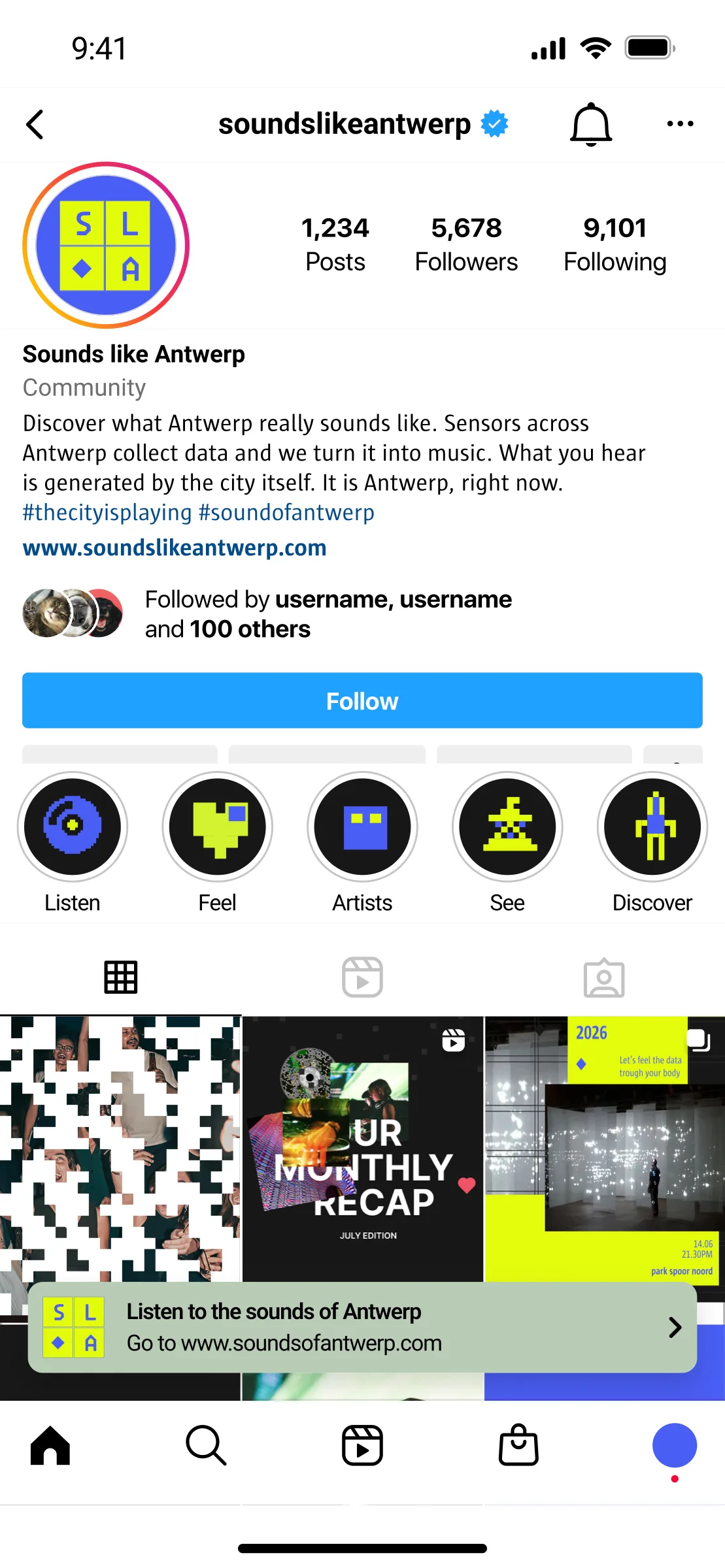
Young urban travellers don’t get inspired by city marketing, but by what they see on their feed. So the campaign lives where they already are: an Instagram account that lets the city do the talking.
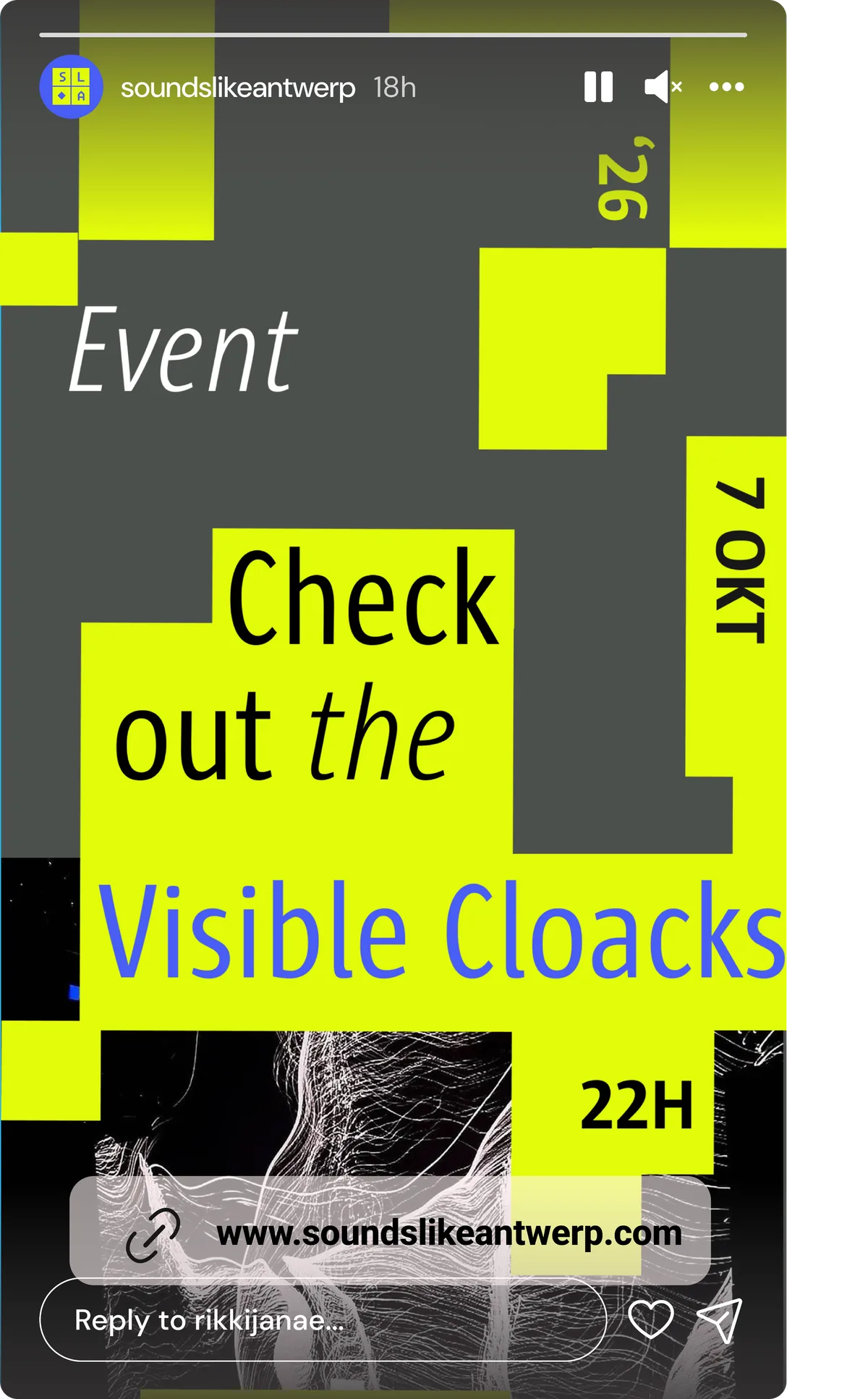
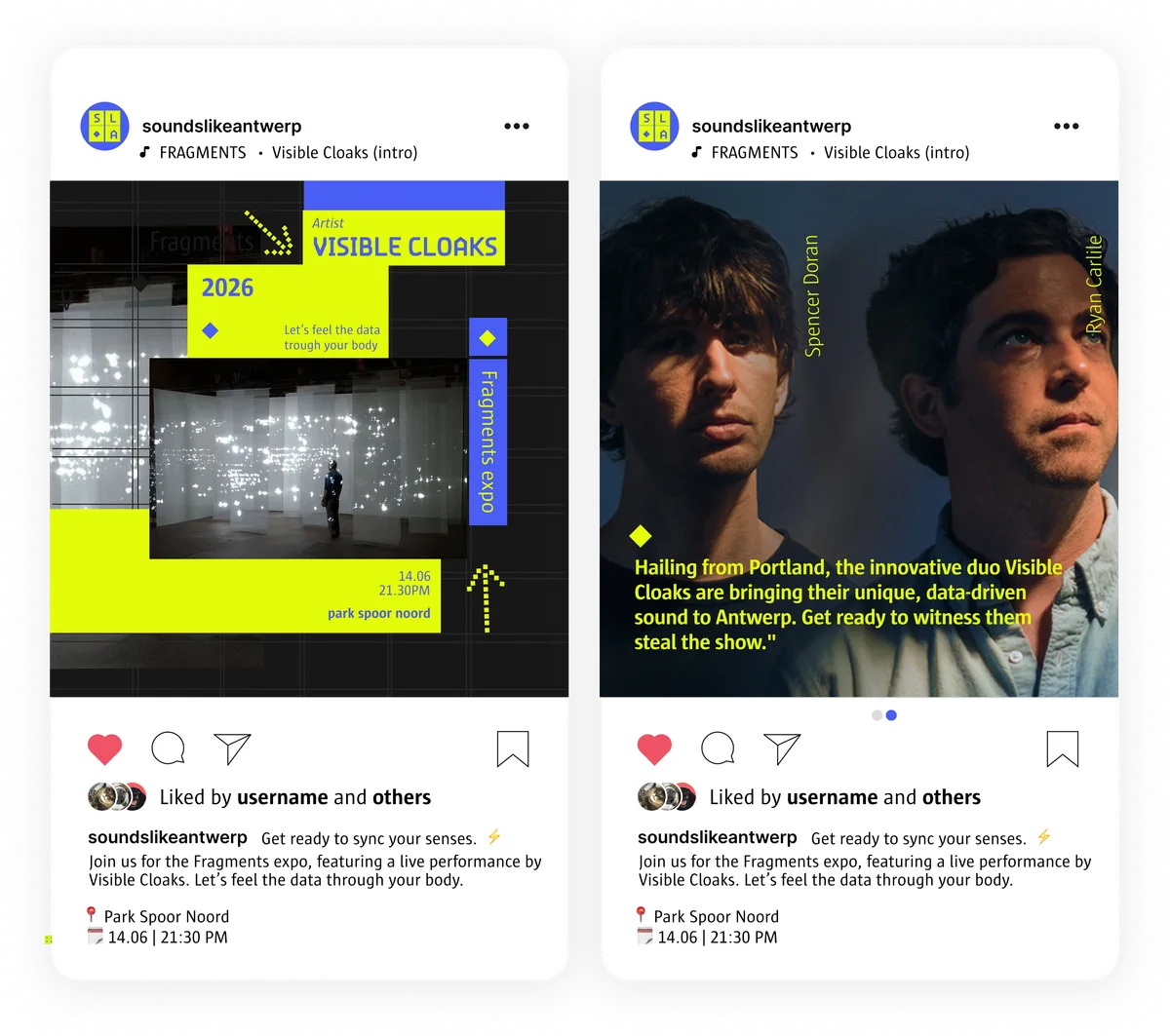
The profile shares what Antwerp sounds like right now, and highlights take you straight into it: Listen, Feel, Artists, See and Discover, each with its own pixel icon. Posts and stories put the events and artists that fit the sound in the spotlight, like a live performance by Visible Cloaks at Park Spoor Noord. Every touchpoint links back to the website, where you make your own sound and plan your trip.
The final result
Results & reflection
Sounds Like Antwerp is a proof of concept for Visit Antwerp, focused on the idea, the interaction and whether it’s feasible, rather than a production-ready platform.
Feedback: Visit Antwerp was enthusiastic about Sounds Like Antwerp and showed real interest in the concept. They saw strong potential in taking the prototype further towards a full realisation.
What I learned: As my first real client project, this was an exciting step. It showed me how projects work in the industry and how important planning and clear communication are. As the visual designer, I worked closely with the team to validate design choices and support the developers in bringing the visuals to life. The part I enjoyed most was translating Visit Antwerp’s existing branding into our own campaign identity, giving it a rave-inspired twist that speaks directly to young urban travellers.